

VELA Medical highlights why Patient Positioning Matters in CBCT Scanning

The VELA CBCT Chair provides a stable seated base during CBCT examinations.
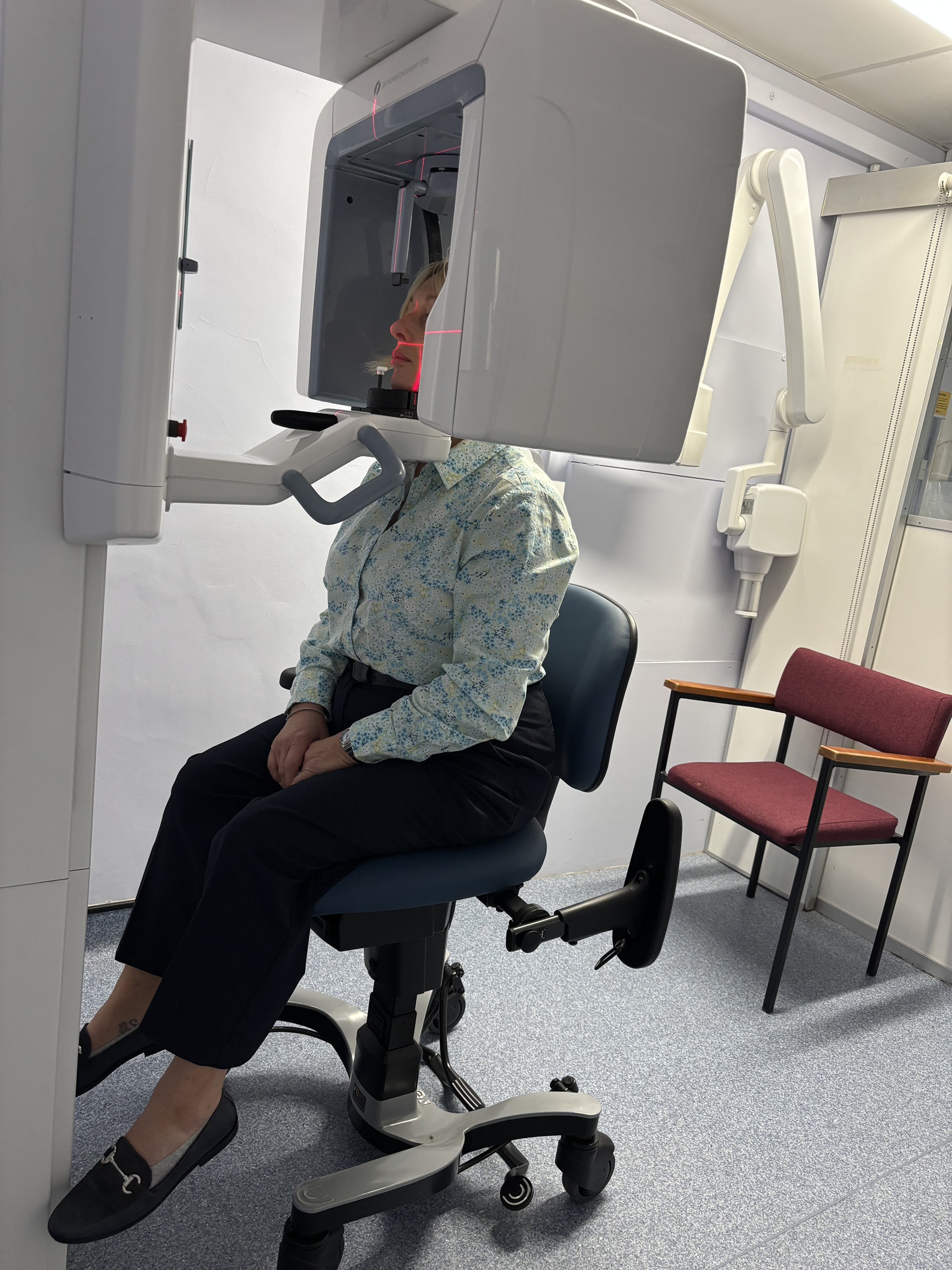
Armrests and a backrest support patients with reduced mobility or difficulty standing.
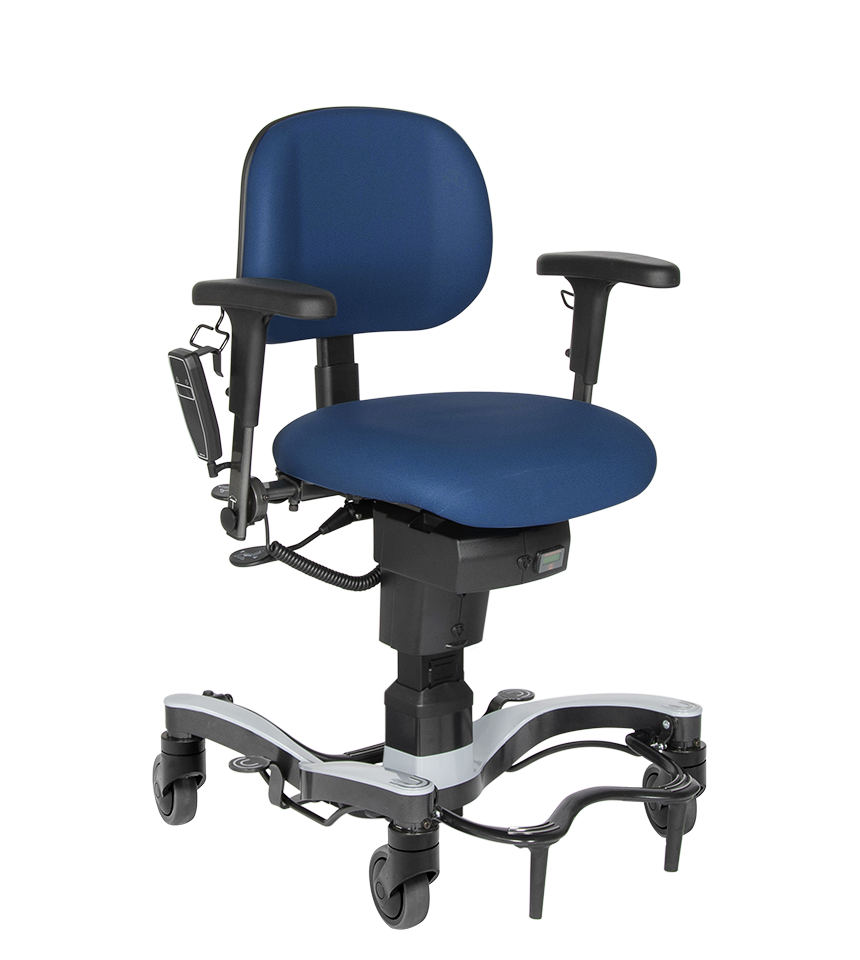
The VELA CBCT Chair features electric height adjustment, operated via a hand control, to help align the patient with the imaging equipment.
Patient movement affects CBCT image quality. VELA Medical explains why stable, adapted positioning, including seated options, deserves attention.
Patient movement can affect CBCT image quality
CBCT has become an important imaging technology across a range of clinical applications. But technology alone cannot ensure high-quality imaging – it also depends on the ability of the patient to remain sufficiently still during the scan.
Research shows this is not as straightforward as it sounds.
A prospective study of 412 patients found measurable head movement in 24% of CBCT examinations. Importantly, movement was associated with a significant reduction in image quality across all seven anatomical regions assessed by the researchers.
Even when trying to remain still, the human body makes small, involuntary adjustments to maintain posture – a phenomenon known as postural sway. For some patients, reduced mobility, impaired balance, fatigue, or age-related limitations can make maintaining a stable position even more difficult.
Another study examined 360 CBCT scans performed with patients in three different positions: standing, sitting and supine. Patients with motion artefacts were older on average, and the association with age was particularly evident among patients scanned in a standing position. The researchers concluded that sitting or supine positioning might help reduce motion artefacts in older patients.
“Motion artefacts are the biggest burden in CBCT imaging. A VELA Chair is the ideal solution to diminish such artefact.” - Reinhilde Jacobs, Professor in Dentomaxillofacial Radiology at University Leuven.
Creating a stable seated position when standing is difficult
For patients who have difficulty standing safely or maintaining a stable position, a seated examination may provide an alternative when the imaging equipment and clinical protocol allow it.
The VELA CBCT Chair is designed to provide a stable seated base during radiographic examinations. A foot-operated locking system keeps the chair stationery once positioned, while electric height adjustment allows healthcare professionals to align the patient with the imaging equipment. Supportive armrests and a backrest further help create a stable seated position for patients with reduced mobility or difficulty standing.
“Imaging technology continues to become more sophisticated, but patient positioning remains a very human part of the examination. If a patient is unable to stand comfortably or remain stable, the equipment around them needs to help the clinical team create a position they can safely maintain.” - Thea Johansen, Physical Therapist and Product Field Manager at VELA.
Patient positioning deserves attention alongside imaging technology
The available research does not suggest that one position is optimal for every CBCT examination, nor does sitting eliminate motion artefacts. Instead, it highlights the importance of adapting patient positioning to the individual.
For older adults and patients with reduced mobility or balance, requiring a standing position throughout an examination may present an additional challenge. Where the imaging system and examination protocol permit seated positioning, providing a stable and appropriately adjusted seating solution can give healthcare professionals another way to accommodate the patient’s physical capabilities.
As imaging technology continues to advance, VELA Medical believes that the physical conditions surrounding the examination deserve attention too – including how patients are supported, positioned and kept stable throughout the procedure.
About VELA Medical
VELA Medical designs and manufactures high-quality medical chairs that combine better exam results and safe patient handling with ergonomic support for healthcare professionals. With a strong focus on ophthalmology, mammography, and radiology specialties, VELA Medical products are developed to improve clinical workflows, increase patient comfort, and reduce strain for staff. By delivering adjustable patient chairs that support safe positioning and efficient patient flow, VELA Medical helps clinics meet the growing demand of patients while mitigating work-related risks for healthcare professionals.
Sources:
- Hanzelka et al. (2013): Movement of the patient and the cone beam computed tomography scanner: objectives and possible solutions
https://pubmed.ncbi.nlm.nih.gov/24237728/
- Moratin et al. (2020): Head motion during cone-beam computed tomography: Analysis of frequency and influence on image quality
https://pmc.ncbi.nlm.nih.gov/articles/PMC7506095/?utm_source=chatgpt.com
- Keris, Demirel & Ozdede (2021): Evaluation of motion artefacts in cone-beam computed tomography with three different patient positioning
https://pubmed.ncbi.nlm.nih.gov/32435975/
Julie Frandsen
VELA Medical
email us here
Visit us on social media:
Facebook
YouTube
VELA X-Ray Chair: Supporting Stable Seated Patient Positioning
Legal Disclaimer:
EIN Presswire provides this news content "as is" without warranty of any kind. We do not accept any responsibility or liability for the accuracy, content, images, videos, licenses, completeness, legality, or reliability of the information contained in this article. If you have any complaints or copyright issues related to this article, kindly contact the author above.
