

Pharmacies Rethink the Workflow: Conveyor Systems Emerge as the Backbone of Modern Pharmaceutical Handling
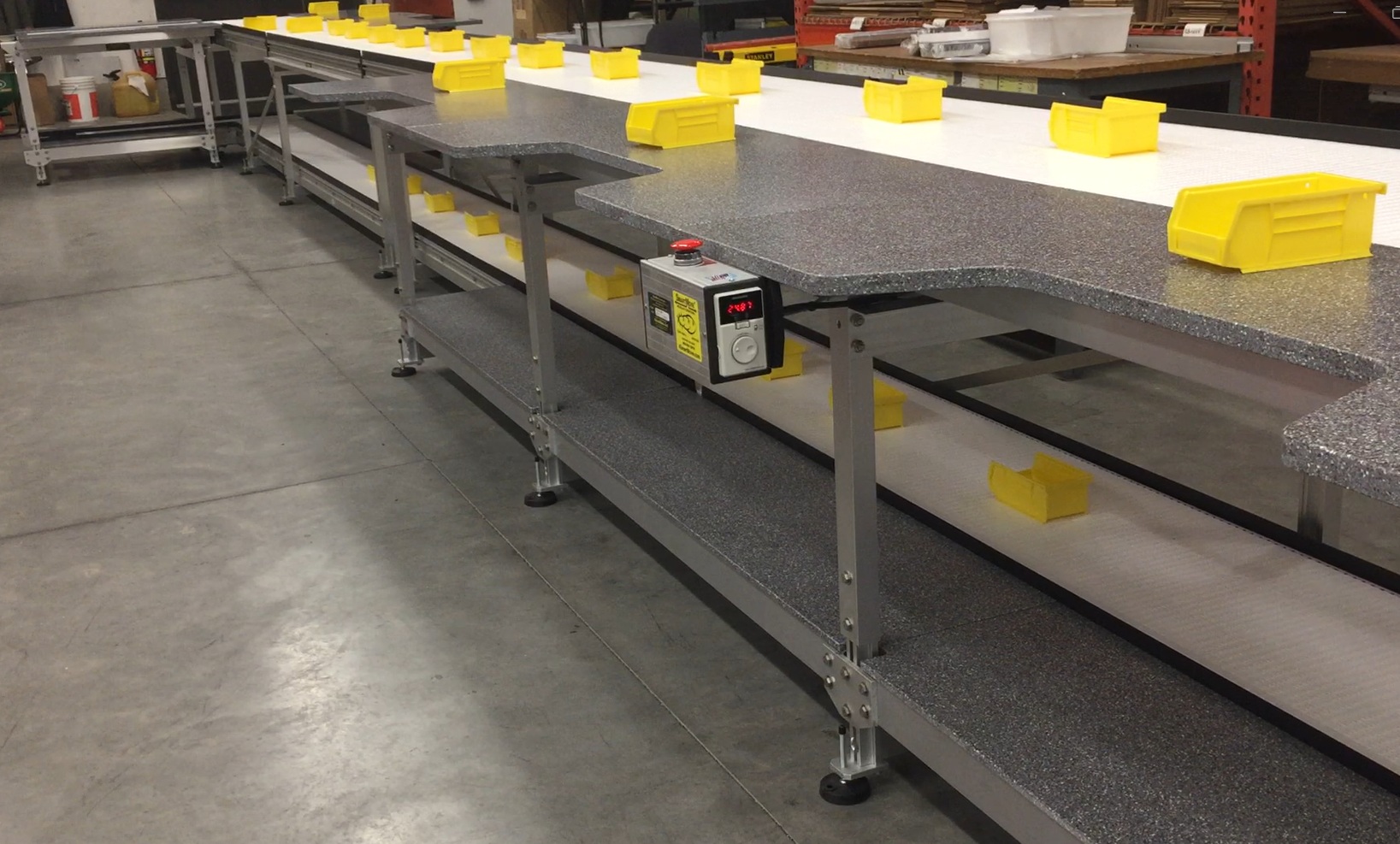
Pharmacy Assembly Line Conveyor
Rising prescription volumes and chronic-care demand are driving pharmacies toward lean, ergonomic, conveyor-assisted fulfillment.
WESTPORT, MA, UNITED STATES, November 2, 2026 /EINPresswire.com/ -- As more Americans rely on daily medications and medical devices to manage chronic conditions, pharmacies of every size are under pressure to fill more orders, more accurately, with the same or fewer hands. Pharmaceutical conveyors, once an afterthought in pharmacy design, are now at the center of that response, and SmartMove® Conveyors says the shift is only accelerating.
"Fulfillment demand has changed what a pharmacy conveyor is supposed to do," said Paula Wright, PhD Engineering Consultant for SmartMove Conveyors. "It used to be a simple take-away line. Today, the conveyor brings the product to the pharmacy technician, then the track travels around the room, close to the picking shelves, so the tech can grab what they need and place it directly into a traveling tote to complete the patient's order. It's a fundamentally leaner way to work."
Why Pharmacy Workflows Are Under Pressure
Research underscores how much of a pharmacist's day is consumed by tasks that don't involve patients. In a multi-site hospital evaluation published through the National Institutes of Health, clinical pharmacists were interrupted an average of 34 times per day, and only about 12% of their total time was spent face-to-face with patients. Medication preparation in specialized settings can take an average of 50 minutes, while verification averages more than 8 minutes per order.
Automation is changing that balance. Studies of automated community pharmacies show higher prescription throughput per full-time pharmacist and a shift away from repetitive technical counting toward patient counseling. Similarly, AI-enabled workflow tools have been shown to cut certain preparation tasks by as much as 80%. Conveyors are the physical connective tissue that lets these technologies work together.
The Numbers Behind the Shift
Demand is the first driver. About six in ten U.S. adults live with at least one chronic disease, and four in ten manage two or more, according to the Centers for Disease Control and Prevention. Americans used 210 billion days of therapy in 2025, up 1.5% from 2024 and about 13% over five years, and retail pharmacies dispensed 84% of that volume.
Spending tells the same story. Net U.S. spending on medicines reached $606 billion in 2025, a 10.6% increase over the prior year, with GLP-1 therapies for diabetes and obesity adding $14 billion in growth on their own, the IQVIA Institute reports.
Capacity is moving the other way. U.S. retail pharmacies are down nearly 8,000 locations since 2018, and more than 2,000 closed in 2025 alone, according to Drug Channels Institute. Massachusetts, home to SmartMove's manufacturing, lost 17% of its active pharmacies between 2019 and 2025, falling from 1,134 to 940, per the state's Health Policy Commission. Fewer pharmacies filling more prescriptions means each remaining site carries more volume.
The workforce is stretched as well. The U.S. Bureau of Labor Statistics counts 471,200 pharmacy technician jobs and projects 6% growth from 2025 to 2035, with about 44,700 openings each year. Each of those technicians spends a shift picking, placing, and filling, which makes workstation design a direct lever on output.
Investment is following the need. The pharmacy automation systems market is projected to grow from $6.65 billion in 2024 to about $10 billion by 2030, a 7.1% annual rate, according to Markets and Markets.
Key Trends SmartMove Conveyors Is Seeing
1. Conveyors That Travel to the Work, Not the Other Way Around. Moving totes by hand between shelves, verification counters, and packing stations consumes time and invites errors. Conveyor lines that circulate near picking shelves reduce walking, carrying, and handoffs, making each pick-and-place step more efficient.
2. Multilevel Conveyors and Counting Systems. SmartMove Conveyors has taken conveying to the next level with multilevel conveyor configurations paired with counting systems, allowing high-volume operations to expand capacity without expanding floor space.
3. Indexing Conveyors for Controlled Loading. Indexing conveyors stop the tote at each load position, so technicians can fill orders methodically and consistently, which supports accuracy at every station.
4. Ergonomics as a Productivity Strategy. Pharmacy technicians spend long shifts picking, placing, and filling. SmartMove conveyors are recessed into custom workstations, allowing techs to comfortably sit or stand. ADA workstation options and incline conveyors are available, and fast-pass lines can be created for urgent orders, ensuring time-sensitive prescriptions are never stuck behind routine volume.
5. Efficiency That Extends to Energy Use. Operating on standard 110 or 220 VAC power, SmartMove conveyors draw less than 3 amps at full capacity, and a high-efficiency 25-watt drive plugs into a standard 120V outlet. They require no grease or lubrication, are rust-resistant, and run quietly, which makes them a comfortable fit for pharmacy environments where concentration matters.
6. Sustainable Manufacturing. SmartMove conveyors are built by sister company AMA Engineering at its factory in Westport, Massachusetts, a facility powered entirely by solar energy. "We operate on a clean footprint, and so does the product we produce," Paula added.
The Road Ahead
With U.S. medicine spending forecast by IQVIA to grow 4.5% to 7.5% a year through 2030, industry observers expect continued investment in conveyor-integrated pharmacy design as prescription volumes grow and labor remains tight. Systems that combine ergonomic workstations, flexible layouts, and low operating costs are positioned to help pharmacies protect accuracy, support their staff, and return pharmacists' time to what matters most: patient care.
"Our goal is simple," Paula said. "Make the picking task as lean and efficient as possible, so pharmacy teams can focus on the people they serve."
About SmartMove Conveyors
SmartMove Conveyors designs and builds custom, energy-efficient conveyor solutions for pharmacy and fulfillment operations. Manufactured by sister company AMA Engineering in Westport, Massachusetts, in a solar-powered facility, SmartMove systems are engineered for ergonomics, accuracy, and low maintenance.
Media Contact: Paula Wright, Sales Engineer | SmartMove Conveyors | 800-581-2876 | Sales@4smartmove.com | www.4smartmove.com
Paula Wright
SmartMove® Conveyors
+1 800-581-2876
Legal Disclaimer:
EIN Presswire provides this news content "as is" without warranty of any kind. We do not accept any responsibility or liability for the accuracy, content, images, videos, licenses, completeness, legality, or reliability of the information contained in this article. If you have any complaints or copyright issues related to this article, kindly contact the author above.
